
Events and Racing
SxS and UTV Racing Guide
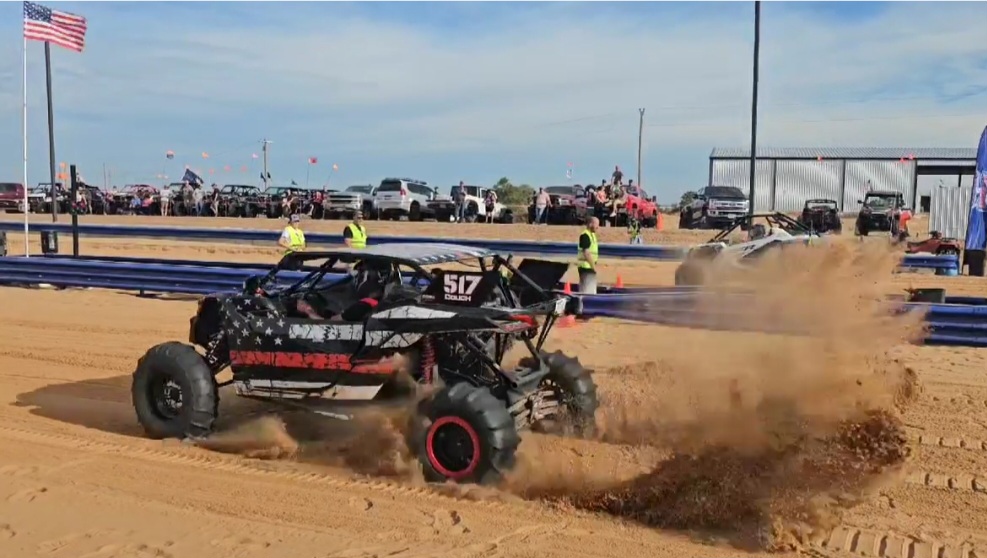
SxS and UTV racing explained: drag, short course, rock bouncer, hill climb, cross-country and mud races, plus how to watch and enter your first race.
Quick answer
SxS and UTV racing ranges from two machines accelerating beside each other to hours of competition through changing terrain. The format determines how competitors prepare, how spectators follow the action, and which rules apply. A machine that fits a recreational trail may need substantial changes before it can enter a race class.
For your first visit, choose whether you want to watch or compete before buying a pass. Read the organizer’s current schedule and rulebook, then confirm spectator access, vehicle eligibility, registration deadlines, and required safety equipment. An event listing helps you discover a race; the promoter decides who can enter and how the competition runs.
Start with the race and competition listings. When a race is held at a riding park, use the linked park profile to check location and access details. Treat race admission, practice access, recreational riding, and camping as separate questions until the organizer says otherwise.
Types of SxS and UTV races
Drag racing
Drag racing puts acceleration at the center of a short, defined course. Two competitors may launch alongside each other, although timing, pairing, surface, and class rules depend on the promoter. Watching the start and finish tells you more than engine noise alone: consistency and the way a machine puts power down matter.
Ask about staging procedures and practice opportunities before entering. Tire choice, engine modifications, and vehicle dimensions can affect classification. Never assume an open riding pass includes permission to use the drag strip. Browse drag racing events to find a format that interests you, then request the current class rules.
Short course
Short-course races use repeated laps on a defined circuit, making it easier to follow competitors as they return to the same corners. Depending on the track, drivers may encounter jumps, tight turns, loose surfaces, and traffic. A good spectator position can reveal braking and passing decisions across several laps.
Competitors should understand flags, starting procedures, contact rules, and how officials handle a stopped machine. Course practice does not replace a drivers’ meeting. Find out whether a novice class exists and whether your machine’s cage, restraints, protection, and equipment meet its requirements before committing to the entry fee.
Rock bouncer and rock racing
Rock racing tests speed and control on difficult rocky terrain. Rock bouncer competition can involve steep, highly technical obstacles and specialized vehicles. The terms describe related styles, but an advertised bouncer event does not automatically offer a class for a recreational UTV.
Choose marked spectator areas rather than following the closest visible route toward an obstacle. Competitors need to know the permitted line, recovery rules, penalties, and whether a course inspection is offered. Rock-crawling destinations can help you understand the terrain, but recreational access and competition eligibility remain distinct.
Hill climb
Hill-climb competition asks a driver to complete a designated ascent, sometimes against the clock or within an attempt limit. Gradient, traction, obstacle placement, and the available run-up all influence how a climb works. A race hill is not an invitation to try the same line during ordinary park riding.
Spectators should stay behind the organizer’s boundaries, including restrictions below and above the course. Entrants must confirm how failed attempts, rollbacks, and recovery are managed. Study the course only when officials permit it, and ask where a first-time competitor can learn the procedures without entering an unsuitable class.
Cross-country and endurance
Cross-country racing covers a longer route with a mix of surfaces and changing conditions. Endurance formats add the challenge of sustaining machine reliability and driver concentration over time. Series such as WORCS, GNCC, and Ultra4 have their own disciplines and rulebooks; their names are starting points for research, not interchangeable class definitions.
Spectator planning matters because competitors may disappear into terrain between viewing points. Ask which areas are accessible and how results are shared. For entrants, refueling arrangements, pit access, support personnel, communications, and required equipment deserve attention alongside speed. Practice recognizing course markers before race day.
Mud and bounty-course racing
Mud racing and bounty-course competition put traction, depth, and obstacle strategy under pressure. Some events focus on a straight run, while others use a defined obstacle course. The machine classes and recovery arrangements can differ sharply between promoters, even when both advertise a mud weekend.
Do not infer water depth or a safe entry line from another competitor’s run. Ask about protective equipment, permitted modifications, winching rules, and how officials stop an attempt. The mud event listings include opportunities to watch this style without assuming every mud gathering is a competition.
How to watch a UTV race
Read the daily schedule with travel time in mind. Practice, qualifying, heats, finals, and awards may occur at different times, and weather can move them. Confirm whether admission covers the whole weekend, whether children need separate tickets, and whether a parking pass is required for your tow vehicle.
Bring hearing protection where appropriate and follow posted spectator instructions. Select a viewing area that allows you to understand the course while staying outside recovery routes and vehicle traffic. Avoid crossing a live course, entering staging lanes, or using a pit entrance simply because another visitor walks through it.
If you want to photograph the race, ask about permitted locations and media requirements. A public ticket rarely grants unrestricted track access. Plan where your group will meet if mobile reception is poor, and allow time to move between viewing areas without missing the race you came to see.
How to enter your first race
Contact the organizer with your machine model, modifications, and experience level. Ask for the current rulebook and a specific class recommendation. Read the sections covering driver eligibility, protective equipment, vehicle inspection, numbers, transponders, and registration before purchasing parts or paying a nonrefundable entry.
Build your preparation around those requirements. A recreational helmet, factory restraint, or stock cage should not be assumed acceptable merely because it is allowed at a riding park. Obtain the organizer’s answer to unclear requirements, and make necessary changes with enough time for inspection and a controlled check of the machine.
Arrive before technical inspection closes and attend required briefings. Ask how staging works, where support people may stand, and what to do if you stop on course. Set a realistic goal for your first entry: understanding procedures and finishing safely can teach more than chasing a faster competitor immediately.
Race weekends vs. riding events
A race weekend organizes people around competition, classes, course control, and results. A riding event may instead emphasize group trails, camping, vendors, or social activities. Some weekends combine both, but the permissions and responsibilities still differ across activities.
For example, Hot Springs Off-Road Park and Boggs & Boulders have park profiles useful for trip planning. Those profiles do not promise a race on your chosen date or permission to enter one. Follow a specific event’s official information before arranging a trip around competition.
Find SxS and UTV races
Use the national events calendar to compare dates, locations, and categories. An event can fit more than one category, so a mud competition may also appear among races. Open its detail page to look for an organizer, registration link, flyer, and canonical riding-location profile.
If you are traveling with people who prefer recreational riding, compare the UTV event planning guide before booking. Decide which activities each person expects and confirm that the park remains open for them during the race. Keep a flexible travel plan until the organizer confirms the final schedule.
Racing FAQ
Can I race a stock UTV?
Possibly, if a promoter offers a suitable class and your machine passes its current inspection requirements. Stock appearance does not establish compliance, and required safety equipment can differ from recreational rules. Ask before registering rather than relying on a different series’ rulebook.
Do I need racing experience to enter?
Eligibility depends on the organizer and class. Seek an explicit novice option or training opportunity when available, and describe your experience honestly. Watching a race and learning staging, flags, and recovery procedures first can make your initial entry easier to understand.
Does a spectator pass include pit access?
Access depends on the ticket and the promoter’s controls. Pits may require a separate credential, waiver, or age restriction, and some areas remain closed to visitors. Verify the arrangement for everyone in your group, including children, before entering a controlled area.