
Terrain Guides
SxS Rock Crawling and Hill Climb Guide
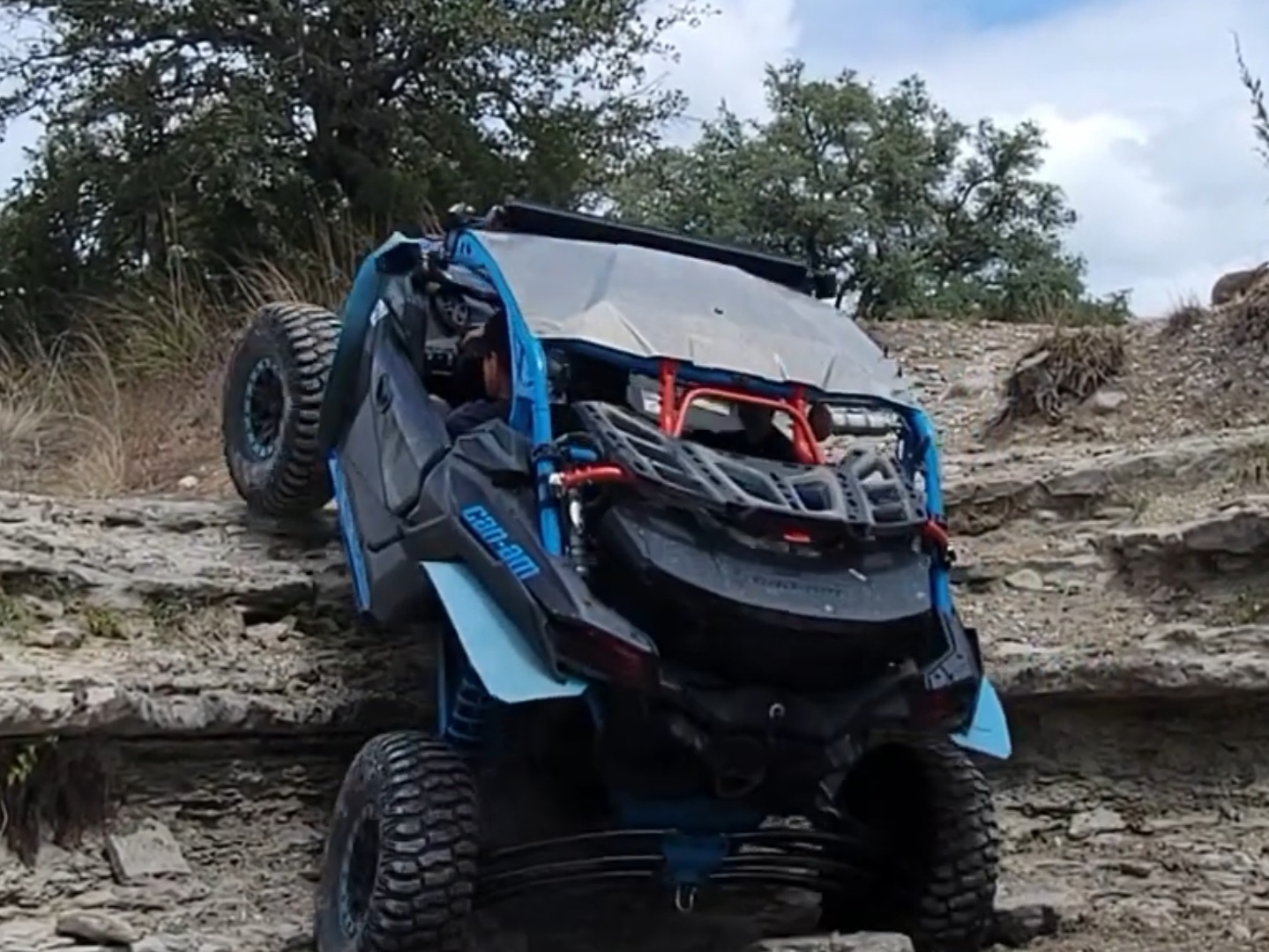
Learn side-by-side rock crawling and hill climbs: low range, line choice, spotters, tire pressure, skid plates, and when to turn around.
Quick answer
Rock crawling rewards deliberate assessment, controlled inputs, and the willingness to choose another line. Prepare the machine for the routes you intend to ride and work with a spotter who understands your communication. A short technical section can demand more judgment than a much longer stretch of ordinary trail.
Hill climbs require a decision before you commit. Evaluate traction, alignment, the crest, and the available exit, then compare the obstacle with your experience and machine guidance. Turning back at a suitable decision point is a useful riding skill, especially when the route leaves little room to correct a mistake.
Machine setup
Inspect skid protection and rock sliders for condition, attachment, and suitability to the vehicle. Protection can reduce exposure to some impacts without making the underside invulnerable. Understand where vulnerable components sit so you can assess clearance rather than relying on a plate to absorb every contact.
Check tire condition, including damage that could become more serious under load against rocks. Select pressure using the tire, wheel, vehicle, load, and manufacturer guidance for your setup. Lowering pressure has tradeoffs, and a number used by another rider may be unsuitable for your combination.
Learn how and when the manufacturer directs you to select low range or other drive settings. Low range can support controlled operation where the model provides it, but selection procedures and intended uses vary. Set up the machine at an appropriate place rather than hunting for a control after entering the obstacle.
Carry compatible recovery equipment and identify suitable recovery points before the ride. Check its condition and confirm that someone knows the intended rated use. Tools and protection do not replace a route choice that leaves the group with a realistic way to request help if needed.
Secure cargo and check restraints, doors, or nets according to the vehicle instructions. Rough terrain makes loose equipment more distracting and can change how passengers experience the ride. Tell occupants what to expect and stop if a seating or restraint problem appears.
Picking a line and using a spotter
Assess the whole section from a safe place before entering. Look at tire placement, clearance, surface grip, and what the machine must do after the first step. A line that clears one rock can still leave you facing an unsuitable second obstacle or a blocked exit.
Choose a line that fits your machine rather than tracing another driver’s tire marks. Wheelbase, track width, clearance, and load affect the path. Take time to understand where the tires and vulnerable parts will travel without assuming a successful crossing by another model applies to yours.
Use one primary spotter so the driver receives a clear set of instructions. Agree on signals and a stop message before moving, and make sure both people can maintain communication. If instructions conflict or you lose sight of the spotter, pause rather than trying to interpret several voices while the vehicle is loaded on an obstacle.
Keep the spotter and bystanders outside the path of the machine and any potential recovery loading. A helper should not need to stand between the vehicle and a rock, downslope in its possible path, or beside a pinch point to guide you. Move spectators to a suitable viewing area before attempting the section.
Advance at a pace that lets you respond to the terrain and agreed instructions. Stop the attempt when the actual line differs from the plan or confidence in clearance disappears. Qualified guidance is more useful than adding throttle to an unresolved positioning problem.
Hill climbs
Study a climb’s surface and shape before approaching it. Loose ground, rock steps, ruts, or moisture can change available traction, and the view from the bottom may conceal the top. Confirm a suitable runoff or exit beyond the crest instead of treating reaching the highest point as the whole task.
Approach deliberately and keep the machine aligned with the intended climb within its operating guidance. Avoid committing to a slope that would require an unfamiliar correction or leave you uncertain about stability. Sideways positioning and abrupt changes on steep terrain can introduce problems that are difficult to recover from.
Choose an alternative before entry when the conditions exceed the driver or machine. Establish the decision point while there is still appropriate room to stop or return. Do not assume you will be able to turn around safely after reaching a narrow or steep section.
A failed climb calls for manufacturer and park guidance and controlled recovery, not a general stunt instruction. Avoid improvised turns, repeated uncontrolled attempts, or instructions shouted by a crowd. Communicate with the group, keep people clear, and request qualified help when a safe recovery plan is not available.
Trail ratings and when to turn around
Rating systems vary between parks and agencies. Colors, numbers, words, or symbols need the local map legend to make sense. A rating at one destination should not be transferred directly to another without understanding what each operator means.
Weather and trail condition can change the challenge after a rating was assigned. A route may develop deeper ruts, loose material, or damaged sections that affect your machine differently. Read current notices and compare what you see with your capability rather than relying only on the map label.
Make turnaround decisions before fatigue and schedule pressure take over. Passengers, spotters, and following riders may notice concerns you have missed. Listen to those observations and choose a bypass or return when the group cannot assess the next section confidently.
Check the official park or land manager for current difficulty guidance and closures. Ask about a route suitable for your experience and configuration, and whether its bypasses remain open. A broad description of the destination as a rock park does not rate every trail within it.
Rock parks
Start with the rock crawling directory to discover represented riding destinations. Open individual pages to compare the available information, then consult current operator maps. The directory category helps narrow your interests without promising that every route is appropriate for recreational practice.
SxSWeRide includes pages for Windrock Park and Stony Lonesome OHV Park. Use those profiles as planning references and ask each operator about current machine access and suitable trails. Do not infer a particular rating, obstacle, or recovery service from the destination’s name.
Rock racing
Recreational rock riding and competition have different planning needs. A race can involve a defined course, technical eligibility, participant procedures, and organizer-controlled spectator areas. Experience on a recreational trail does not establish that a machine or driver is ready to enter.
Read the SxS race event guide before investigating competition. Confirm the current rulebook and event instructions with the organizer, including whether you are visiting as a spectator or applying to participate. Keep competition expectations separate from the careful route assessment you use on an ordinary ride.
FAQ
Do skid plates mean you can ignore underside clearance?
Skid protection has limits and does not shield every component or prevent every impact. Evaluate tire placement and clearance for the actual obstacle even when protective parts are installed.
What if two people give different spotting instructions?
Pause and reestablish one primary spotter using the communication you agreed on. Resolve conflicting guidance before moving again so the driver is not guessing between instructions.
Can an easy rating guarantee a manageable climb?
A local rating summarizes a route under that system rather than guaranteeing today’s surface or your vehicle’s fit. Check conditions and choose another path if the visible climb exceeds your capability.