
Terrain Guides
SxS Dune Riding Guide
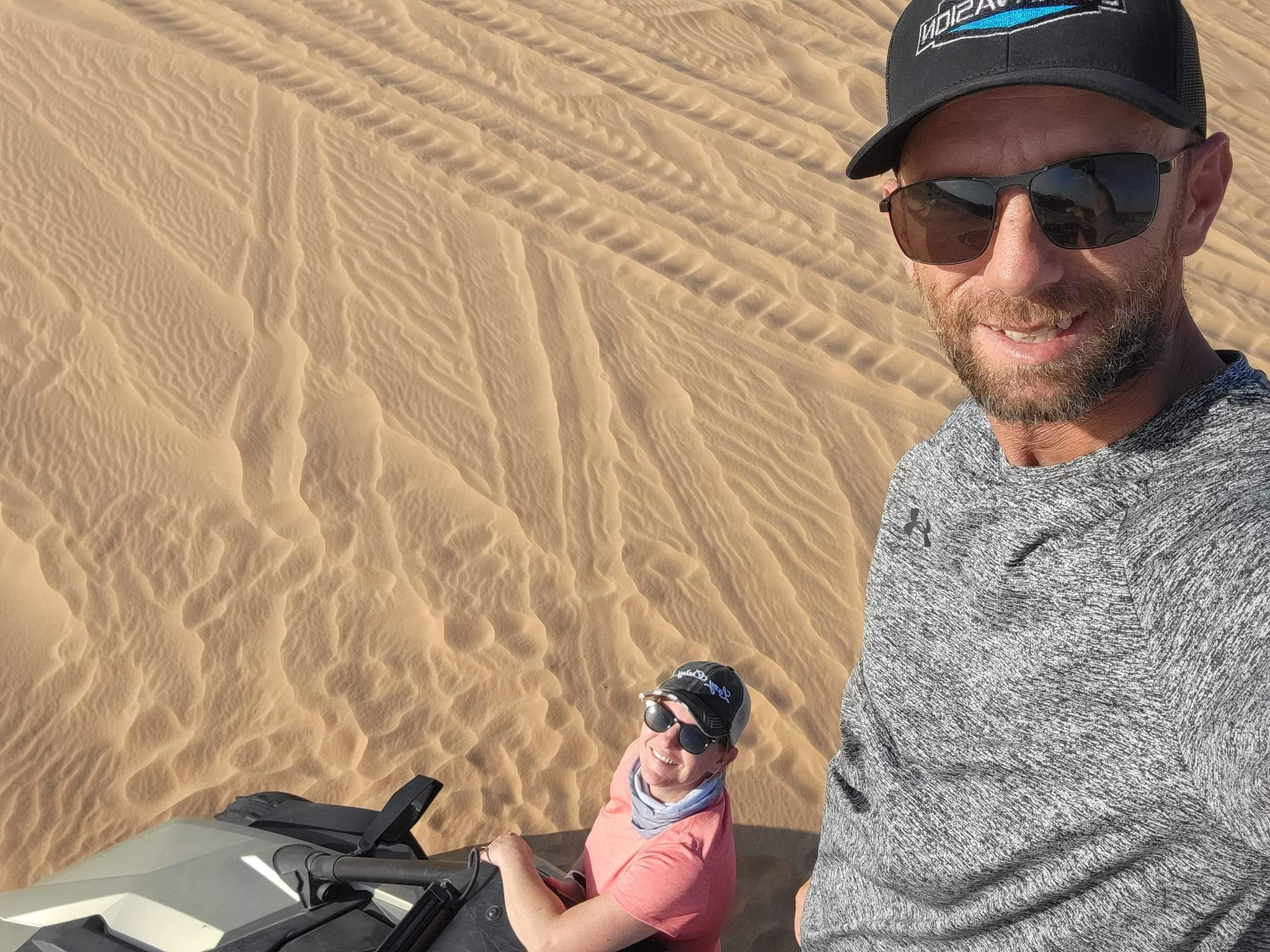
Ride the dunes safely: whip flags, paddle tires and air pressure, reading slip faces and blind crests, and dune areas to plan around.
Quick answer
Dune riding calls for careful visibility decisions because a smooth approach can hide a steep drop or another machine. Prepare for sand, keep your route within what you can see and assess, and leave blind jumps out of the plan. Wind can reshape the ground between visits, so a familiar line still deserves a fresh look.
Confirm the area’s flag, access, and seasonal requirements before departure. Choose tire and machine settings from appropriate manufacturer guidance rather than copying a pressure number from another rider. Your first sand outing should leave enough time to learn the terrain and return before fatigue or worsening conditions narrow your options.
Gear and machine setup
Whip flags are often required at dune areas because machines can disappear behind changes in elevation. Ask the applicable operator about the current flag specification and mounting requirements. Inspect the mount and flag before riding, and remember that a visible whip provides information rather than a guarantee that another driver sees you.
Paddle tires are an optional sand-oriented setup, not a prerequisite you should assume applies everywhere. Suitability depends on the vehicle, tire design, intended terrain, and how you reach the riding area. Consult the relevant guidance about compatibility instead of fitting an aggressive setup solely because another machine uses it.
Select tire pressure according to the tire, wheel, machine, load, and manufacturer instructions. Reducing pressure can have tradeoffs involving tire retention, handling, and damage, so there is no single number appropriate to every SxS. Carry a suitable gauge and a way to restore your approved settings when the trip involves different surfaces.
Sand riding can place sustained demands on the drivetrain and cooling system. Follow the manual for gear selection and monitor temperature warnings rather than pushing through them. Inspect cooling surfaces and airflow paths for blockage using the recommended procedure; avoid hot components and do not assume a pause alone resolves an underlying fault.
Secure water, navigation, and recovery supplies so they remain accessible. Sand can make a short-looking route take longer than expected, particularly if the group stops repeatedly. Pack for sun exposure and delay while keeping loose items away from controls and restraints.
Reading the dunes
A dune’s windward approach and its steeper slip face can look very different. A gradual slope does not tell you what lies over the ridge. Treat the unseen side as unknown until you can assess the shape and traffic from a safe position.
Approach crests cautiously and avoid committing beyond your visible route. Blind jumps combine uncertain landing terrain with the possibility of another rider below. If reaching a view would require a maneuver beyond your training or machine guidance, select another route instead of using speed to solve the uncertainty.
Wind changes more than surface appearance. It can alter ridges, fill depressions, expose firmer ground, and change how familiar approaches behave. Tracks left by another vehicle may describe an earlier crossing under different conditions and do not establish a safe line for you.
Watch for changes in slope and texture as you move between sections. Flat light can make depth harder to judge, while shadows may conceal an abrupt transition. Slow your decision-making when the terrain becomes difficult to read and avoid following the lead machine so closely that its path becomes your only reference.
Crossing slopes requires caution because the machine’s stability and traction depend on the surface and position. Follow model-specific operating guidance and avoid a line you cannot evaluate confidently. You need a suitable exit as well as an achievable approach, particularly where a route leads toward a steep face.
Riding dunes as a group
Agree on a leader, a final rider, and a regrouping plan before the first dune. Establish an initial pace that lets everyone understand the visibility conditions. A group should choose routes around its least experienced driver rather than leaving that person to chase disappearing flags.
Space machines so each driver can evaluate terrain and respond without crowding the vehicle ahead. More room may be needed in dust or blowing sand, but large gaps also require dependable communication. Discuss what to do when someone loses visual contact instead of assuming they will find the group by following tracks.
Stop in a permitted, visible location away from blind approaches, crest crossings, and likely travel lines. A machine parked where an approaching driver cannot see it creates a problem even when the occupants feel stationary and secure. Regroup where you can communicate without exposing people to moving traffic.
Keep the route back in mind as the group travels. Save the staging position using the navigation method you understand, and use recognizable landmarks where practical. If a machine has trouble, communicate its position and keep additional vehicles from entering the same difficult patch without a plan.
Dune areas on SxSWeRide
Browse the sand dunes directory to compare represented riding areas. Treat the category as a starting point for access planning, then open individual pages for available information and official references. A listing does not establish current flag rules, closures, or whether your configuration is accepted.
The directory includes Little Sahara Sand Dunes in Oklahoma, Ehrenberg Sandbowl OHV Area, and Hot Well Dunes. Review each location separately rather than assuming that destinations sharing sandy terrain have the same operator or visiting conditions.
You can also investigate Saint Anthony Sand Dunes and Dumont Dunes. Use their park pages to identify represented information, then confirm unresolved details with the applicable authority. Choose based on your vehicle, experience, travel plan, and the current conditions rather than the size of the destination’s reputation.
Permits, heat and wind
Verify requirements for access permits, any seasonal restrictions, and local flags with the land manager or park. Ask how closure notices are communicated and whether the entrance you plan to use is currently available. Keep relevant documents and contact information where you can retrieve them without reception.
Plan around heat exposure for both occupants and the vehicle. Carry accessible drinking water, arrange breaks, and shorten the ride when conditions make concentration or comfort deteriorate. Do not use a planned distance as a reason to continue after a warning or a passenger’s concern.
Check wind and visibility before riding and reassess them during the outing. Blowing sand can reduce sightlines and make navigation more difficult, while changes in light can obscure terrain. Leave enough flexibility to stop or return while the route remains manageable.
FAQ
Do paddle tires replace careful route selection?
A sand-oriented tire changes aspects of traction but does not reveal a hidden slope or approaching traffic. Evaluate terrain and vehicle limits independently of the tire setup you choose.
Can you use the same pressure as another SxS?
Different loads, wheels, tires, and machines can require different settings. Use guidance for your combination and ask the manufacturer or a qualified provider when the suitable range is unclear.
What should you do if visibility worsens mid-ride?
Communicate with the group and use the agreed plan to reach a suitable stopping or return location. Avoid continuing over unreadable crests just to complete the original route.